HOME PROJECTS PUBLICATIONS ABOUT ME

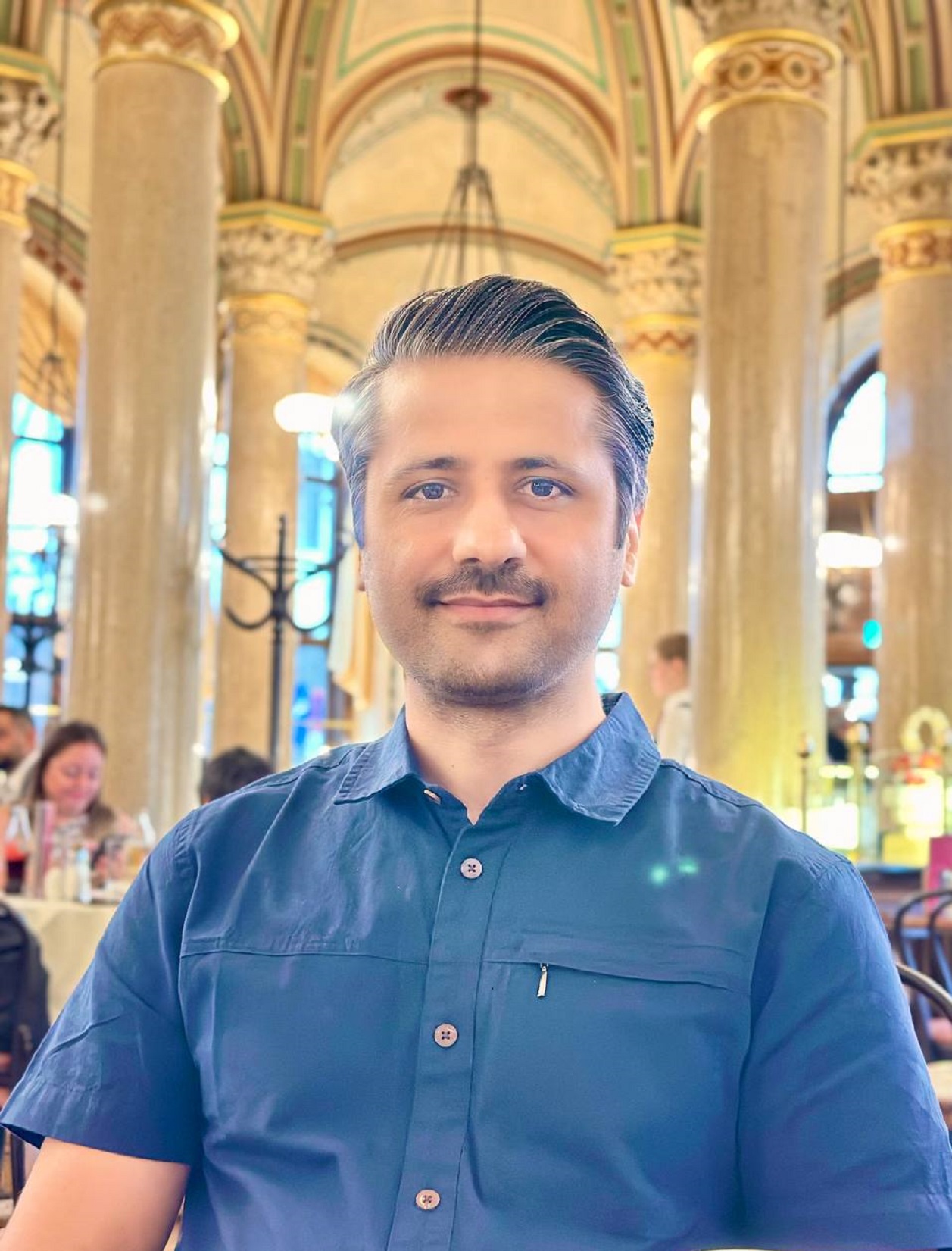
Jalil Nourmohammadi Khiarak

I am a Researcher and AI Engineer at Aptiv Poland, holding a PhD in Artificial Intelligence from Warsaw University of Technology. My work specializes in machine learning, computer vision, and AI safety systems for automotive applications, with broader research interests in deep learning and human-centered perception technologies.

My work bridges advanced AI with real-world impact—developing robust systems that enhance intelligent mobility, support human-machine collaboration, and enable inclusive technology. I am also committed to the ethical role of technology in multilingual societies and contribute to initiatives that promote education in minority languages, including speech technologies for underrepresented languages such as South Azerbaijani.

Research Interests: Computer Vision, Speech Recognition, Deep Learning, Human-Centered AI, Language Technology for Minority Languages


Resume Resume
CV CV
Email Email
Scholar Google Scholar
GitHub GitHub
LinkedIn LinkedIn
PhD Thesis PhD Thesis
Jalil Nourmohammadi Khiarak

PROJECTS

English–Azerbaijani Parallel Corpus & Machine Translation Platform

We developed a high-quality English–Azerbaijani (Arabic script) parallel corpus aimed at supporting research and applications in low-resource machine translation. In addition, we launched a web-based translation platform that enables real-time English ↔ Azerbaijani translation using models trained on our corpus.

Key Contributions:

  • Curated and aligned a clean bilingual dataset for academic and applied MT research.
  • Developed a public-facing machine translation web app to promote accessibility and language technology use.
  • Supports linguistic inclusion, digital preservation, and cross-lingual communication for the South Azerbaijani community.

Building Automatic Speech Recognition for South Azerbaijani: Dataset, Model, and Benchmarks

This project introduces the first Automatic Speech Recognition (ASR) system and dataset for South Azerbaijani, a widely spoken but technologically underrepresented language in Iran. South Azerbaijani is not included in popular multilingual ASR models like Whisper or MMS, and no public speech-text datasets have existed until now. Our work fills this gap by creating:

  • A curated speech-text dataset from native speakers
  • A fine-tuned wav2vec2-BERT model adapted to the Arabic-based script
  • Evaluation benchmarks, including a general-domain test set (GoldSet)
  • Open-source code and data for research use
Unlike generic models that fail to produce intelligible output, our system generates meaningful transcriptions tailored to South Azerbaijani. This is a foundational step toward preserving and empowering this language in speech technology. 🔗 The dataset and code will be released under a research-only license to support future academic and open-source efforts.

🔬 Research Involvement in Sclera Biometrics

I have actively participated in several editions of the Sclera Segmentation Benchmarking Competition (SSBC), including:

  • SSBC 2020
  • SSBC 2025 (9th Edition)Privacy-aware model learning through synthetic data
The SSBC 2025 competition focused on a highly relevant and forward-looking theme: training sclera segmentation models using synthetic ocular data and weakly labeled masks, addressing pressing challenges around data scarcity and privacy concerns in biometrics. This initiative supports the development of segmentation models that generalize well to real-world conditions without relying on manually annotated datasets.

Through my participation, I contributed to:

  • Designing and evaluating deep learning models under low supervision.
  • Exploring privacy-preserving machine learning techniques in the biomedical imaging domain.
  • Publishing research in peer-reviewed venues, including a paper in IEEE Transactions.
These efforts are part of my broader commitment to advancing biometric recognition through robust, ethical, and scalable AI solutions.

🛍️ Product Recognition with Deep Learning

I have worked on the design, testing, and implementation of a deep learning-based system for automated product recognition. This project involved building a robust object recognition pipeline capable of identifying products from various categories in real-world environments such as retail stores or warehouses.

Key contributions include:

  • Data Preparation: Curated and augmented a large dataset of product images under varying lighting, occlusion, and background conditions.
  • Model Training: Fine-tuned and evaluated state-of-the-art convolutional neural networks (CNNs) for high-accuracy object classification and localization.
  • System Integration: Deployed the trained model into an end-to-end pipeline that supports real-time inference and product identification in test scenarios.

This project contributed to automating visual inspection tasks and improving inventory management through AI-driven visual understanding.

PUBLICATIONS

  1. Jalil Nourmohammadi Khiarak et al. "Privacy-enhancing Sclera Segmentation Benchmarking Competition: SSBC 2025". IEEE IJCB, 2025.
  2. Jalil Nourmohammadi Khiarak et al. "Ear-Touch-Based Mobile User Authentication". Mathematics, 12(5), 2024.
  3. Jalil Nourmohammadi Khiarak et al. "Enhancing Language Learning through Technology: Introducing a New English-Azerbaijani (Arabic Script) Parallel Corpus". arXiv:2407.05189, 2024.
  4. Jalil Nourmohammadi Khiarak et al. "Ssbc 2020: Sclera segmentation benchmarking competition in the mobile environment". IEEE IJCB, 2020.
  5. Jalil Nourmohammadi Khiarak et al. "NIR iris challenge evaluation in non-cooperative environments: Segmentation and localization". IEEE IJCB, 2021.
  6. Jalil Nourmohammadi Khiarak et al. "The unconstrained ear recognition challenge 2019". ICB, 2019.
  7. Jalil Nourmohammadi Khiarak et al. "Attacking a Smartphone Biometric Fingerprint System: A Novice's Approach". ICCST, 2018.
  8. Jalil Nourmohammadi Khiarak et al. "Exploring bias in sclera segmentation models: A group evaluation approach". IEEE TIFS, 2022.
  9. Jalil Nourmohammadi Khiarak et al. "New hybrid method for feature selection and classification using meta-heuristic algorithm in credit risk assessment". Iran Journal of Computer Science, 2020.
  10. Jalil Nourmohammadi Khiarak, A. Pacut. "An ear anti-spoofing database with various attacks". ICCST, 2018.
  11. Jalil Nourmohammadi Khiarak et al. "Big data analysis in plant science and machine learning tool applications in genomics and proteomics". IJCES, 2018.
  12. Jalil Nourmohammadi Khiarak et al. "New hybrid method for heart disease diagnosis utilizing optimization algorithm in feature selection". Health and Technology, 10(3), 667–678, 2020.
  13. Jalil Nourmohammadi Khiarak et al. "Combined multi-agent method to control inter-department common events collision for university courses timetabling". Journal of Intelligent Systems, 2019.
  14. Jalil Nourmohammadi Khiarak et al. "KartalOl: a new deep neural network framework based on transfer learning for iris segmentation and localization task". Iran Journal of Computer Science, 2023.
  15. Jalil Nourmohammadi Khiarak et al. "Object detection utilizing modified auto encoder and CNN". SPA Conference, 2018.
  16. Jalil Nourmohammadi Khiarak et al. "The unconstrained ear recognition challenge 2019 - ArXiv version". arXiv:1903.04143.
  17. Jalil Nourmohammadi Khiarak et al. "New hybrid method for heart diseases diagnosis utilizing optimization algorithms in feature selections". Health Technol., 2019.
  18. Jalil Nourmohammadi Khiarak et al. "KartalOl: Transfer learning using deep neural network for iris segmentation and localization". arXiv:2112.05236, 2021.
  19. Jalil Nourmohammadi Khiarak. "Transfer learning using deep neural networks for Ear Presentation Attack Detection". arXiv:2112.05237, 2021.
  20. Jalil Nourmohammadi Khiarak et al. "Presentation Attack Detection Methods Based On Gaze Tracking And Pupil Dynamic". arXiv:2112.04038, 2021.

ABOUT ME

I'm Jalil Nourmohammadi Khiarak, a Machine Learning Engineer with over 5 years of hands-on experience designing and deploying AI solutions that bridge research and industry. My work spans across computer vision, deep learning, and predictive analytics — always driven by real-world impact and innovation. Currently, I’m an Expert Algorithm Development Engineer at Aptiv, where I develop perception algorithms in a cross-functional Scrum team, integrating the latest ML technologies into market-ready automotive systems. Previously, I’ve built object recognition models at Omniaz, deployed room-type detection systems at SonarHome, and optimized human detection pipelines at ShyldAi. I hold a Ph.D. in Artificial Intelligence and Robotics from Warsaw University of Technology, with research contributions in biometrics and mobile authentication at UC3M Madrid. My work is backed by 14+ international publications, contributions to more than 10 AI workshops, and practical experience in tools like PyTorch, TensorFlow, FastAI, Docker, and AWS. I'm passionate about blending strong theoretical foundations with production-grade solutions.

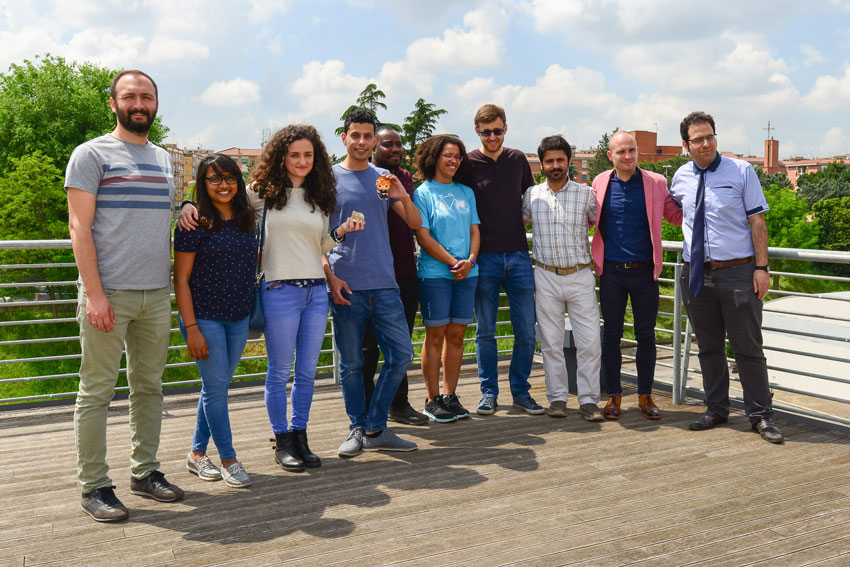
Early Stage Researchers (ESRs), Rome, 2018 Photo 1
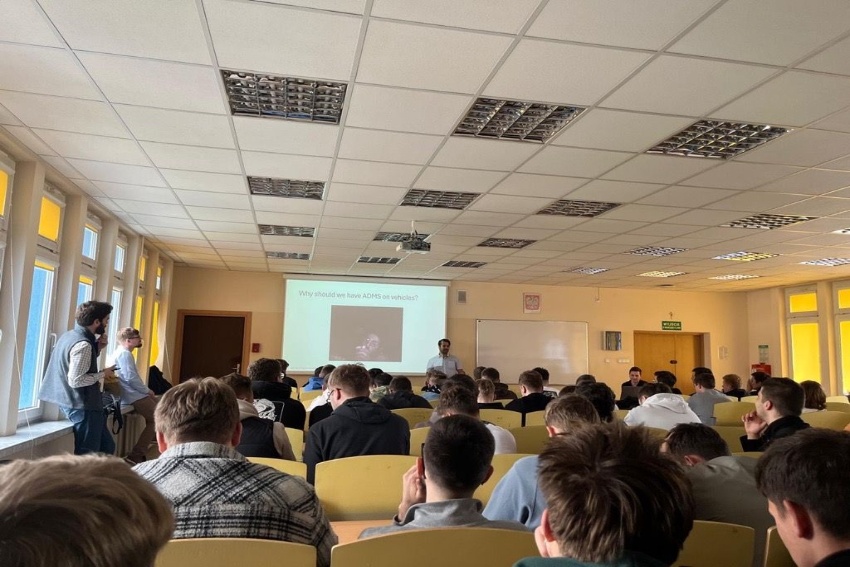
My lecture at Rzeszow University of Technology during APTIV Day, 2025 Photo 2
×

Tickets

Need help?